

Open your SharePoint admin center and look at Active sites.
How many of those sites are actually still being used?
This is a problem in almost every Microsoft 365 environment. Someone creates a site for a project, the project ends, and the site stays. Repeat that for a few years and you end up with old project sites, abandoned vendor portals, test sites, and content nobody is actively managing.
That is more than clutter. Inactive sites create three problems:
- Storage: Old content continues consuming your SharePoint storage.
- Security: Permissions, sharing links, and old access remain in place.
- AI readiness: Copilot and other AI tools may surface outdated content that users can still access.
The good news is that Microsoft now provides tools to help automate this cleanup.
Find Inactive Sites with SharePoint Advanced Management
SharePoint Advanced Management includes Site Lifecycle Management, which can identify sites that have become inactive over time.
The process is straightforward:
- Microsoft evaluates activity across your SharePoint environment.
- Sites that meet your inactivity threshold are identified.
- Site owners can be asked to confirm whether the site is still needed.
- Sites that are not certified can eventually be placed into read-only mode or archived.
You can define inactivity based on periods such as 90 days, six months, or another interval that makes sense for your organization.
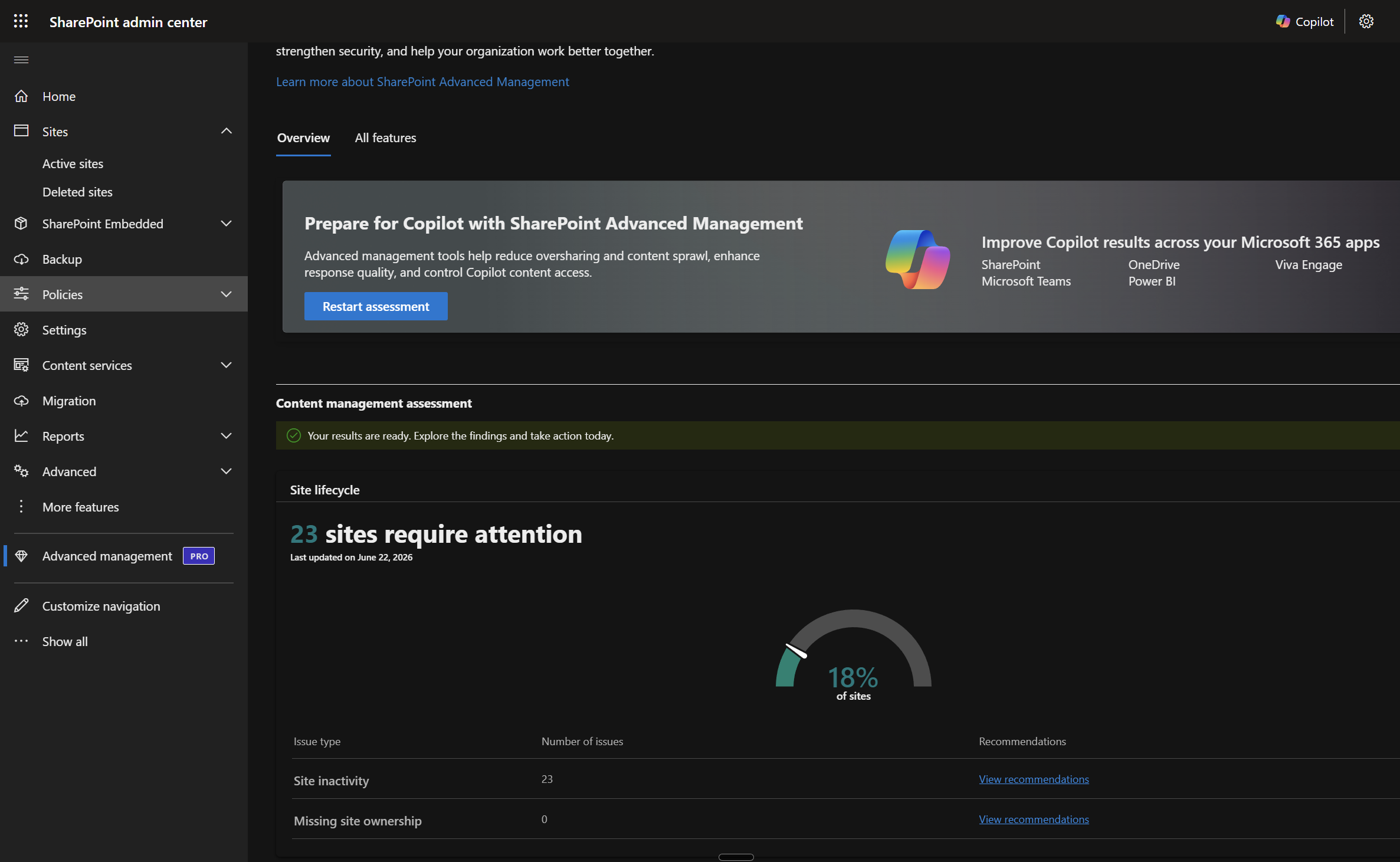
From the SharePoint admin center, open Advanced Management and run an assessment.
The assessment can identify:
- Inactive sites
- Sites missing owners
- Last activity dates
- Site storage
- Site ownership information
You can also export the inactive site results to CSV for further analysis.
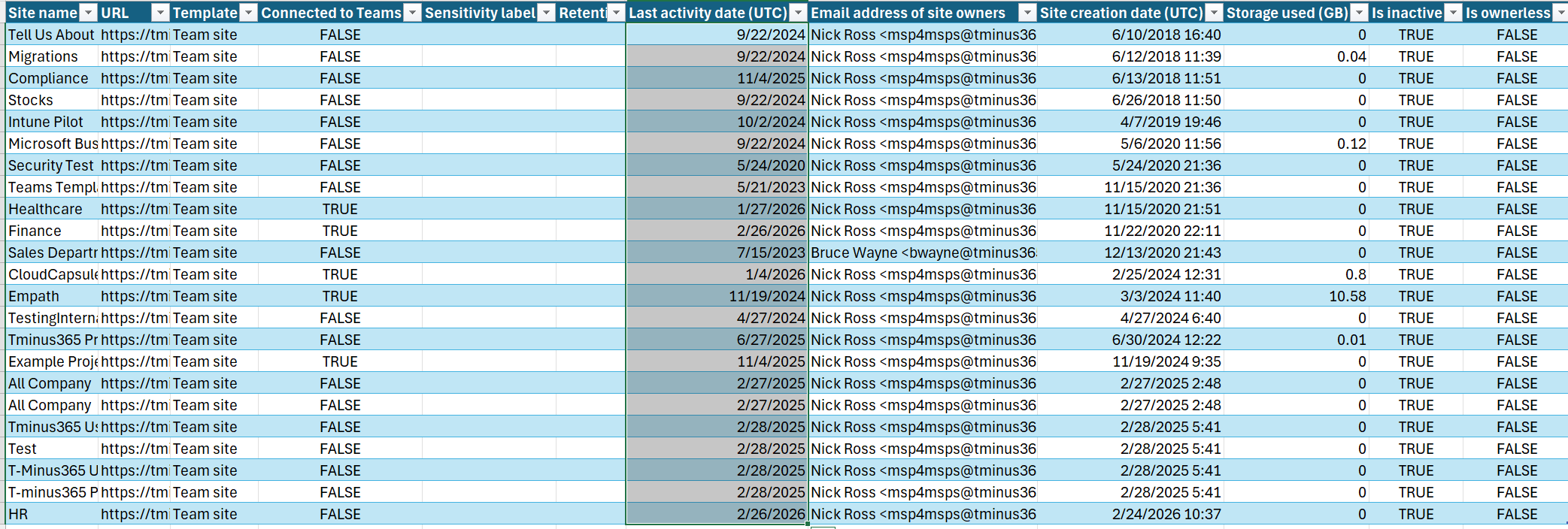
For MSPs, this report is also useful during discovery. Before creating an automated policy, review the inventory with the customer and identify sites that can be retired immediately.
Create an Inactive Site Policy
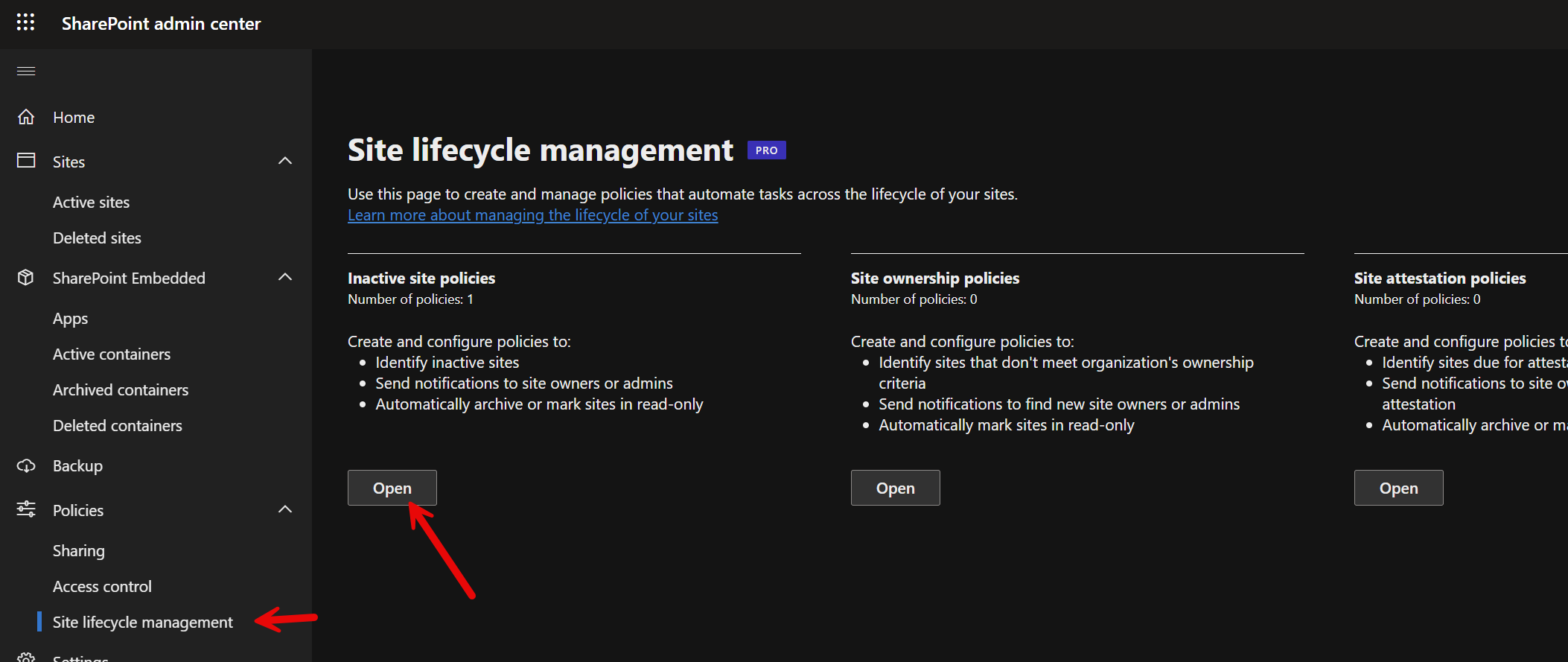
Once you understand the environment, go to:
Advanced Management > Policies > Site Lifecycle Management
Create a new Inactive site policy.
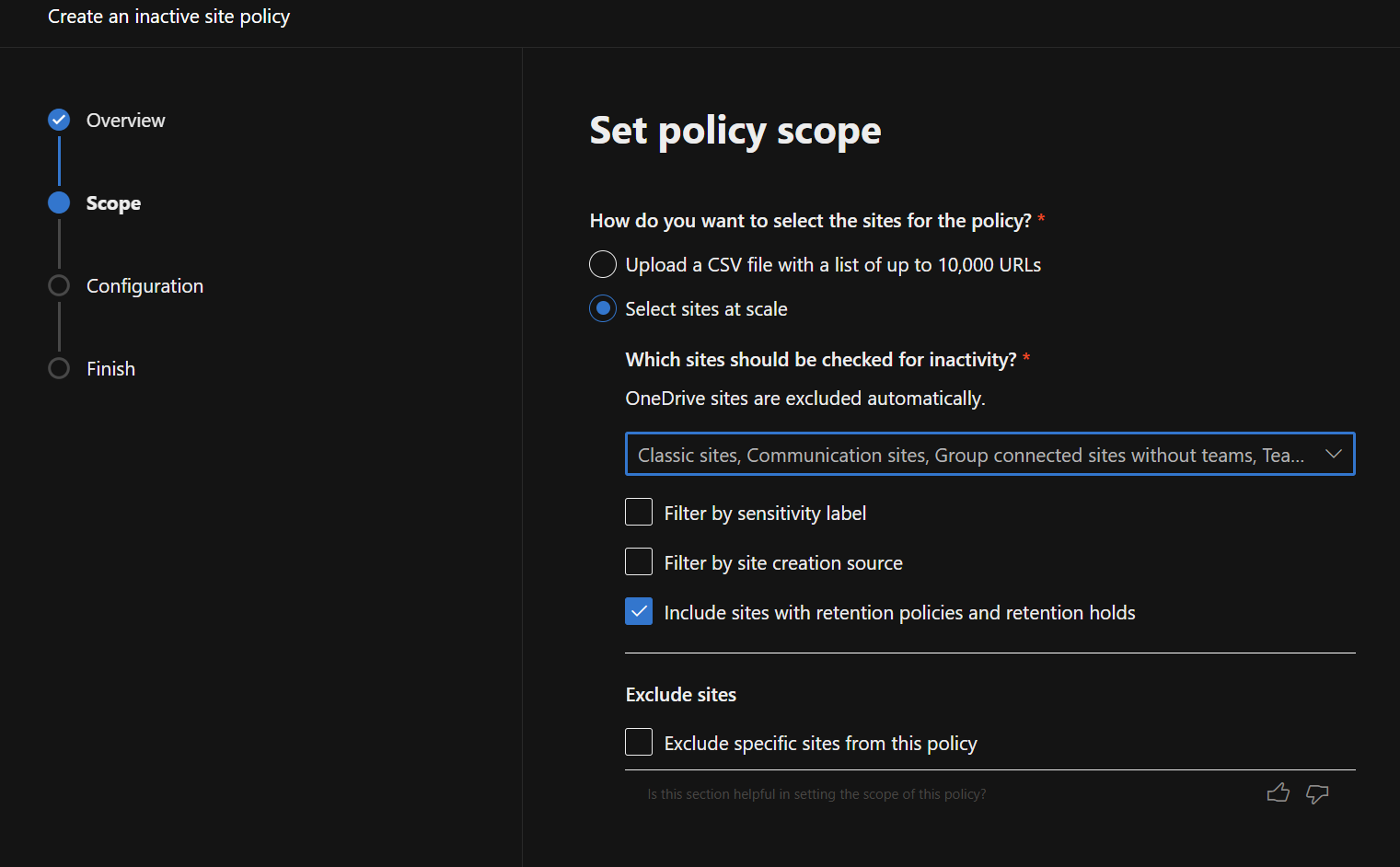
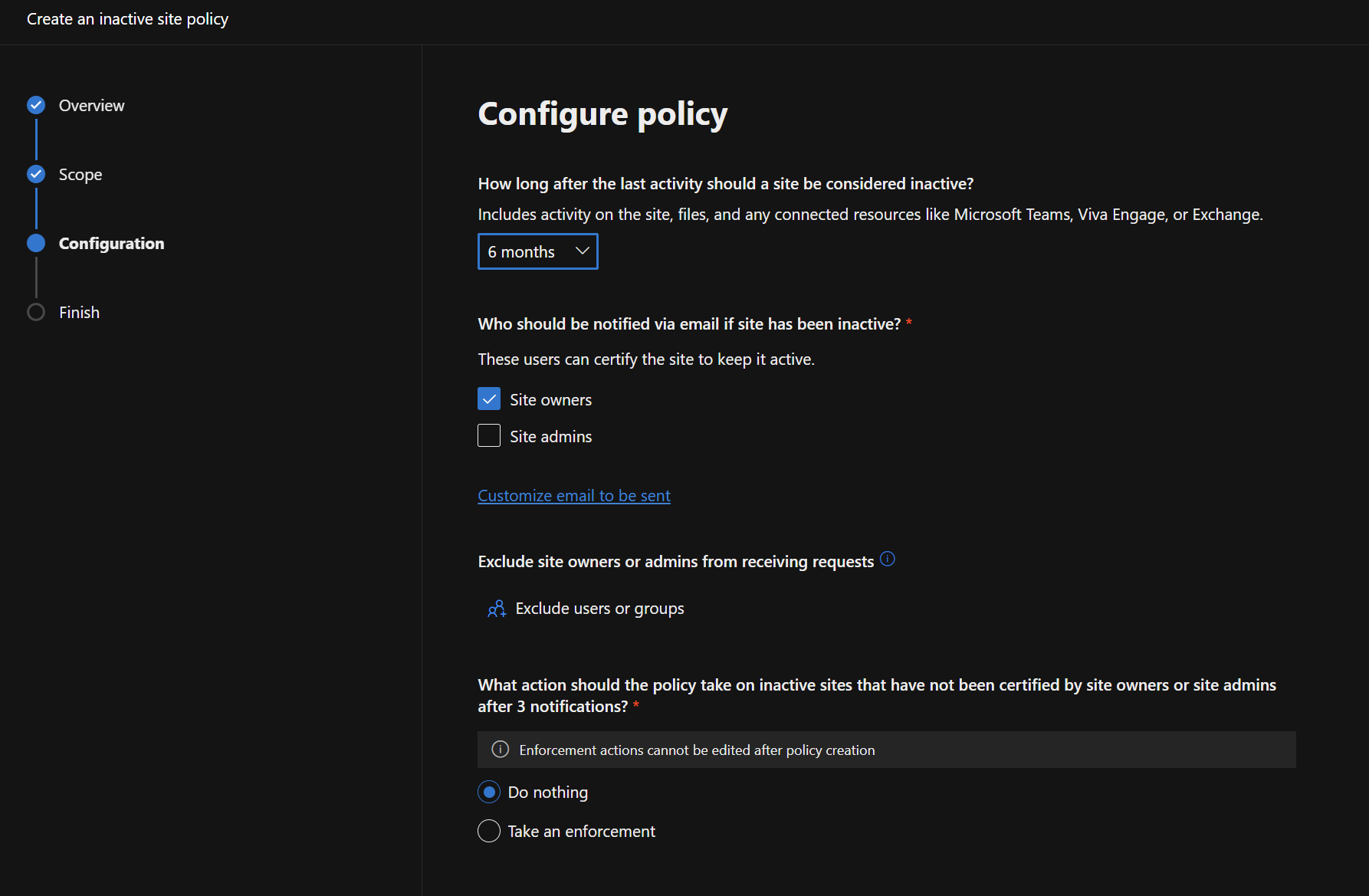
From here, you can configure:
- Which SharePoint sites are included
- How long a site must be inactive
- Which sites should be excluded
- Whether site owners or administrators receive notifications
- What happens when nobody responds
I typically recommend starting with a three to six month inactivity window, although this will depend on the organization.
You can also customize the message sent to site owners asking them to certify whether the site is still required.
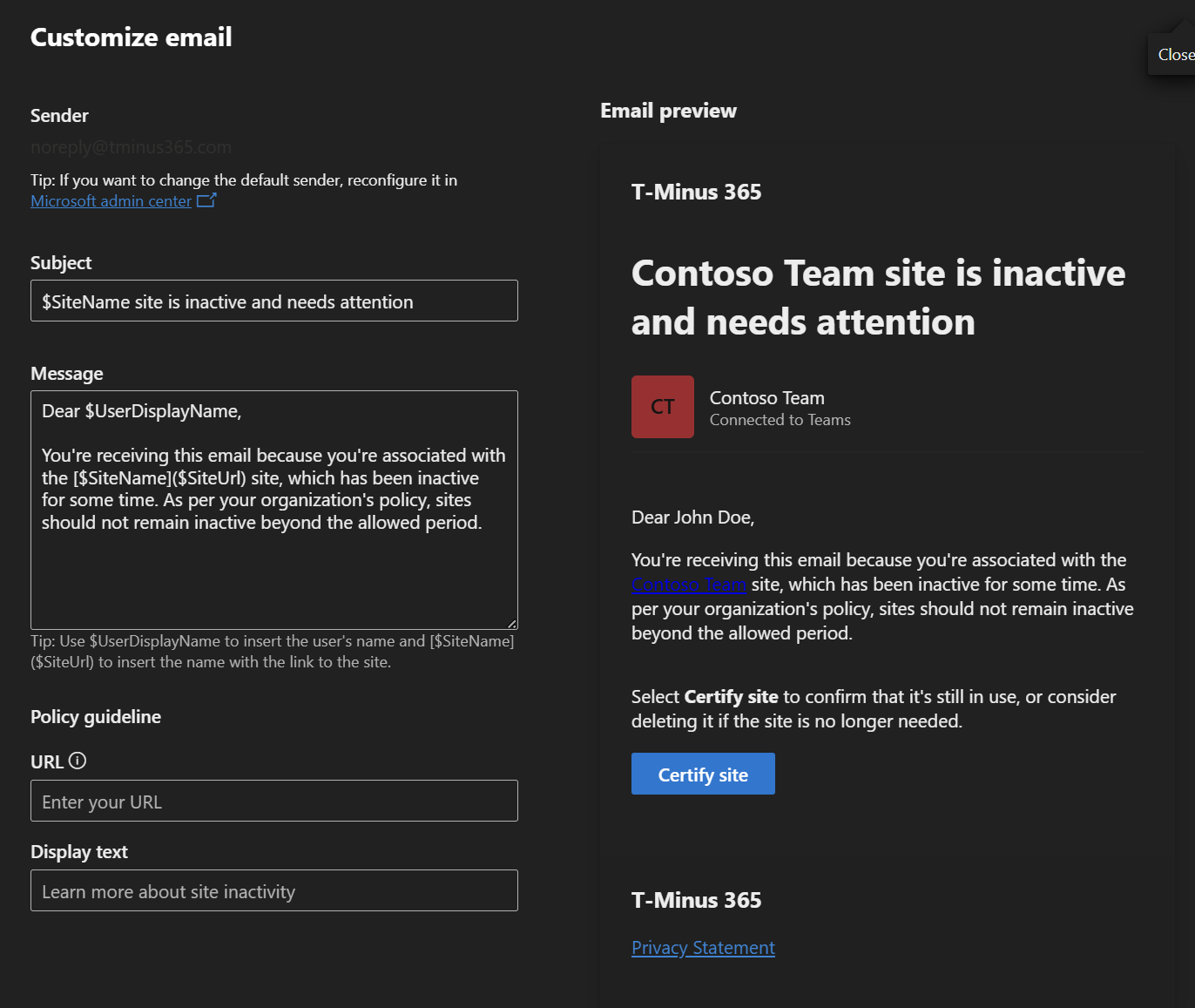
If the owner confirms the site is still needed, it remains active.
If they do not respond, or confirm that the site is no longer needed, you can take an enforcement action.
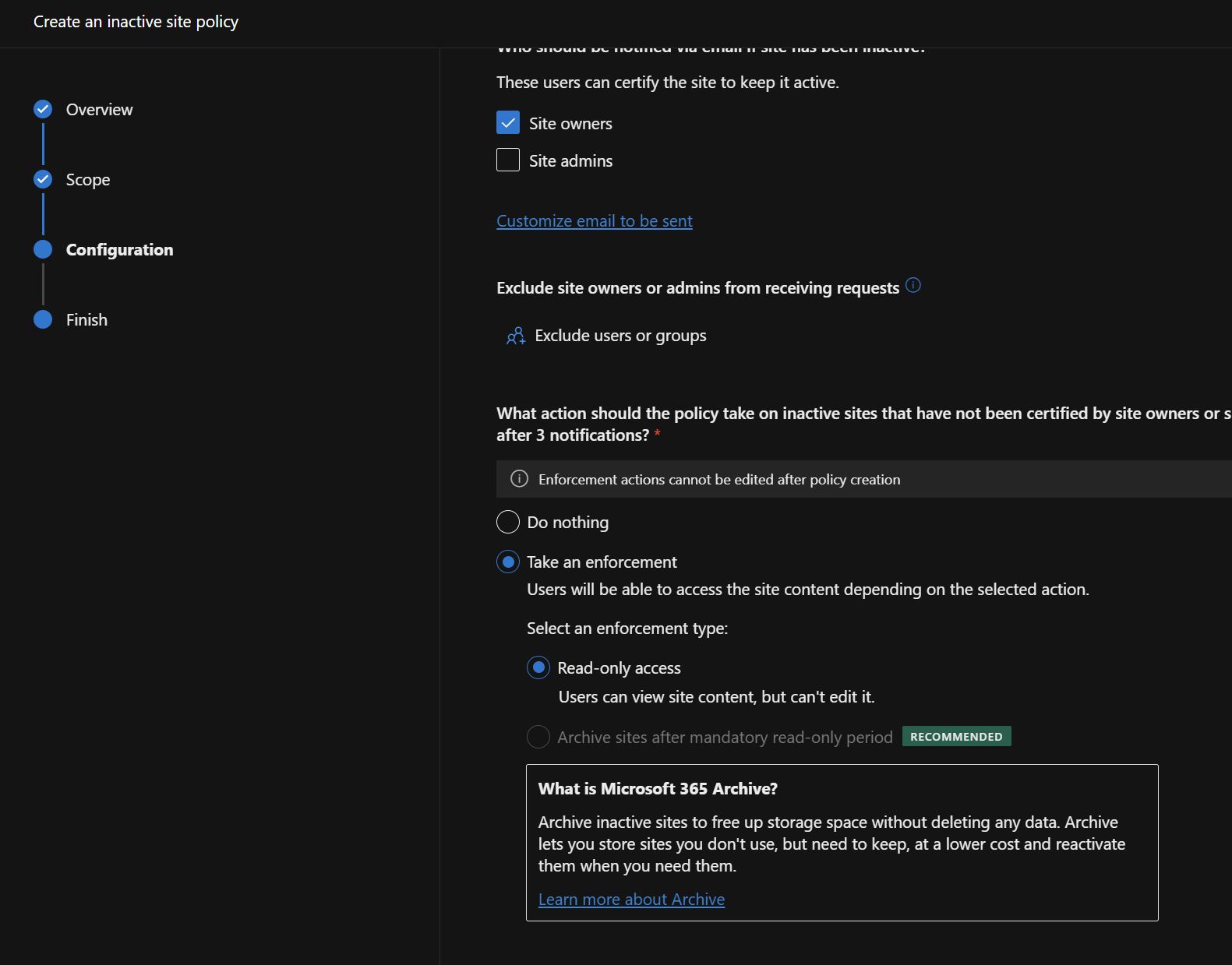
Read Only vs. Archive
Read-only access
Users can continue viewing the site, but they can no longer modify its content.
This is a good first step when you are not ready to delete anything.
It is also reversible. An administrator can unlock the site later if the business needs it again.
Archive the site
You can also archive inactive sites using Microsoft’s native Microsoft 365 Archive capabilities.
This can help reduce active storage consumption while preserving content that may still need to be retained.
For most organizations, I recommend beginning in simulation mode.
This allows you to generate reports and understand what would be affected before automatically changing site access.
Once you are comfortable with the results, you can move the policy into enforcement.
Moving Sites out of read-only mode: Manage inactive sites using inactive site policies – SharePoint in Microsoft 365 | Microsoft Learn
Important for Copilot: Read Only Is Not Enough
Making a site read only does not necessarily stop Copilot or other AI experiences from using its content.
If users can still discover the content, AI tools may still reference it.
For sites containing stale or sensitive information, SharePoint Advanced Management also provides Restricted Content Discovery.
This can prevent content from appearing in Copilot, Microsoft 365 AI agents, and organization-wide search results.
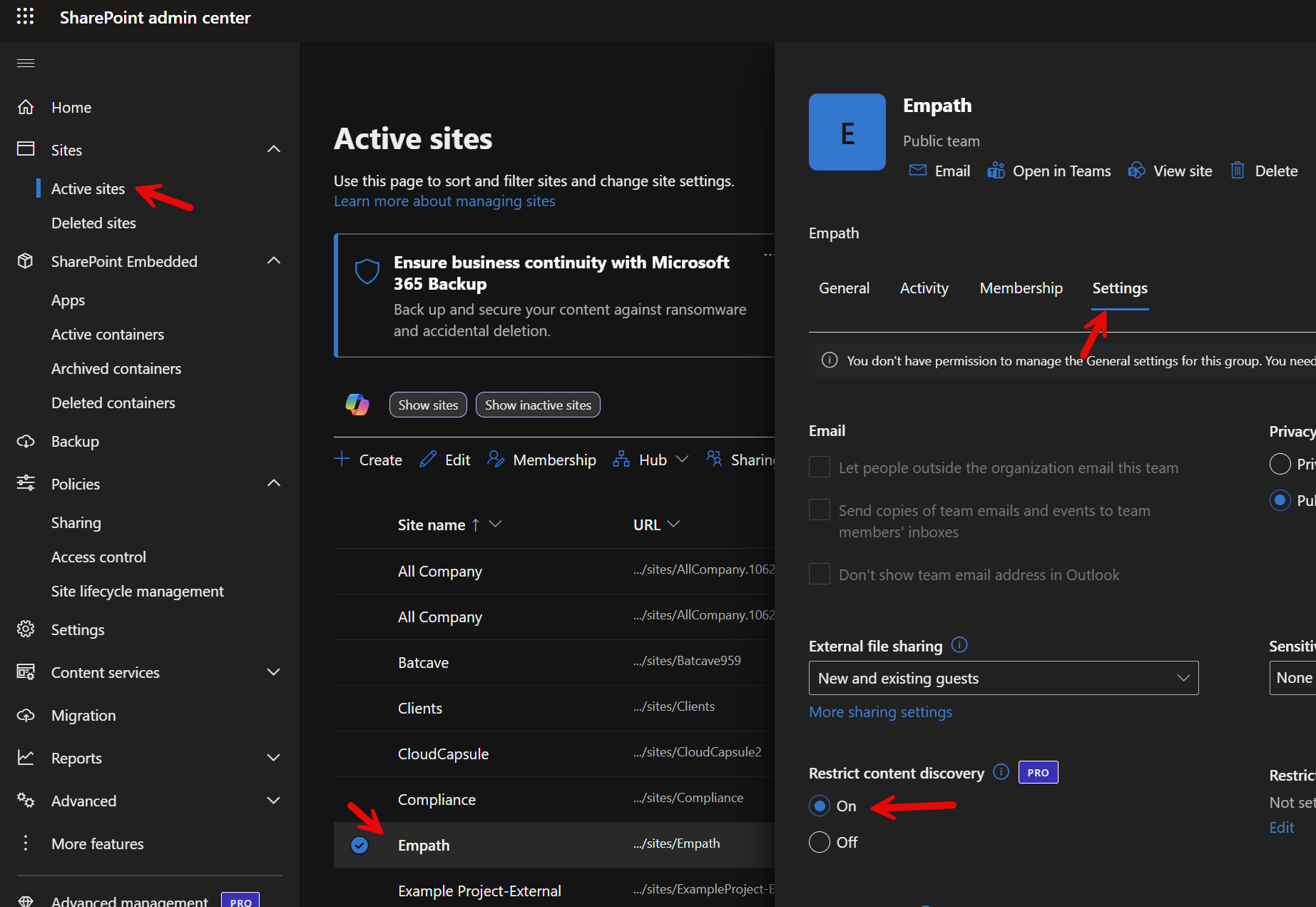
This is an important distinction.
Site Lifecycle Management helps control what happens to an inactive site.
Restricted Content Discovery helps control whether that site’s content should continue appearing in AI and search experiences.
Finding Inactive Sites with CloudCapsule
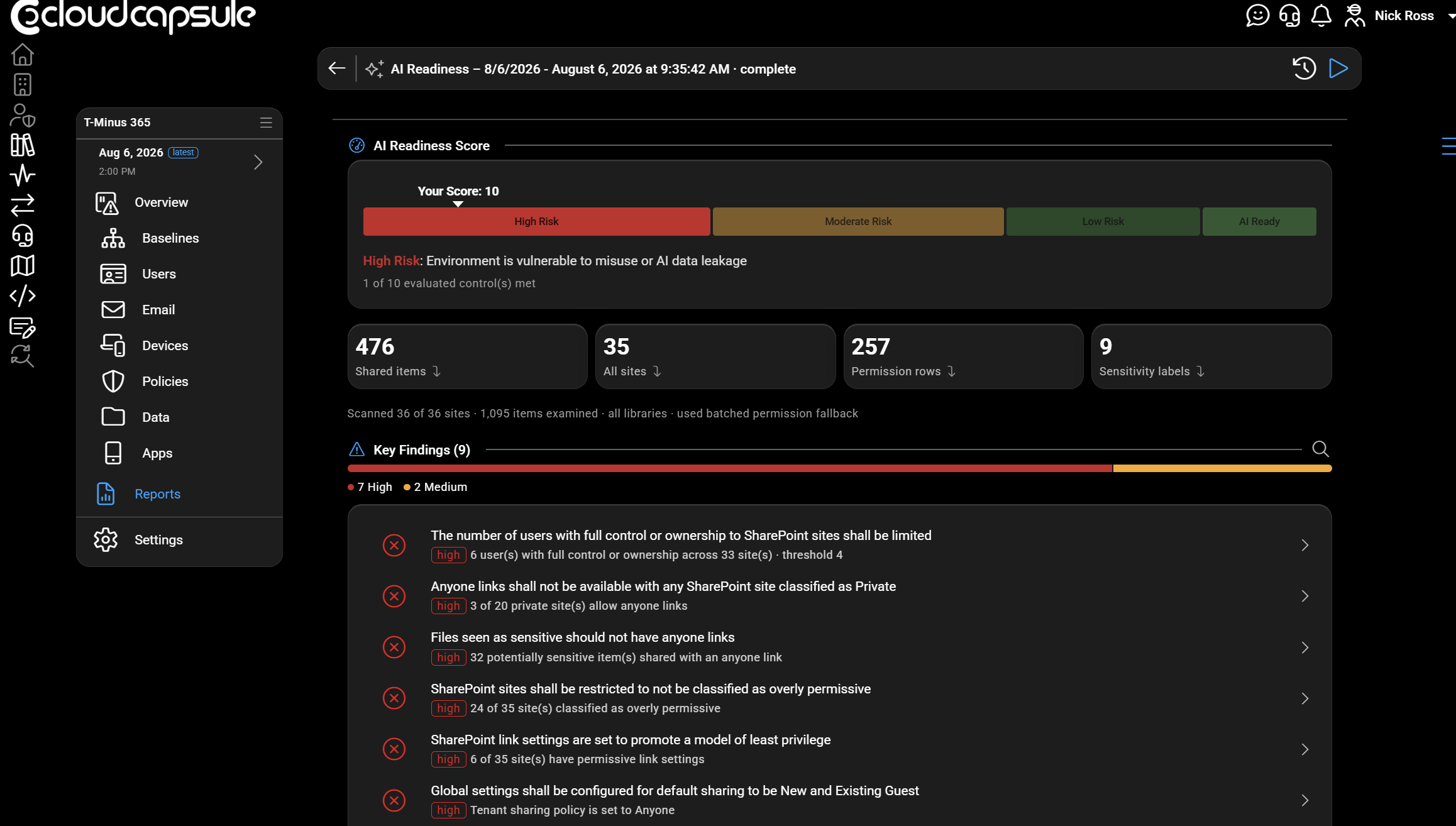
If you manage multiple Microsoft 365 environments, CloudCapsule can also help surface inactive SharePoint sites as part of your broader Microsoft 365 assessment process.
This is particularly useful for MSPs that want to identify potential cleanup opportunities across customer environments without manually reviewing each SharePoint tenant.
You can use those findings as part of your discovery process, then move into SharePoint Advanced Management when you are ready to implement lifecycle policies and automated remediation.
Final Thoughts
Inactive SharePoint sites are not harmless.
They consume storage, preserve old access, and can introduce outdated information into your AI rollout.
A good lifecycle process should:
- Identify inactive sites.
- Confirm whether the business still needs them.
- Move abandoned sites to read only or archive them.
- Restrict AI discovery where appropriate.
- Repeat the process automatically over time.
The goal is not to delete everything old.
It is to make sure every site that remains in Microsoft 365 still has a purpose, an owner, and an appropriate level of access.